Tracing Black Ancestry: Reconnecting to Africa Through the Records

A masterclass in understanding what makes long-range reconstruction possible—and what it reveals about Black ancestry.

Paul Crooks presents this masterclass regularly for research audiences in the UK and US. View scheduled dates

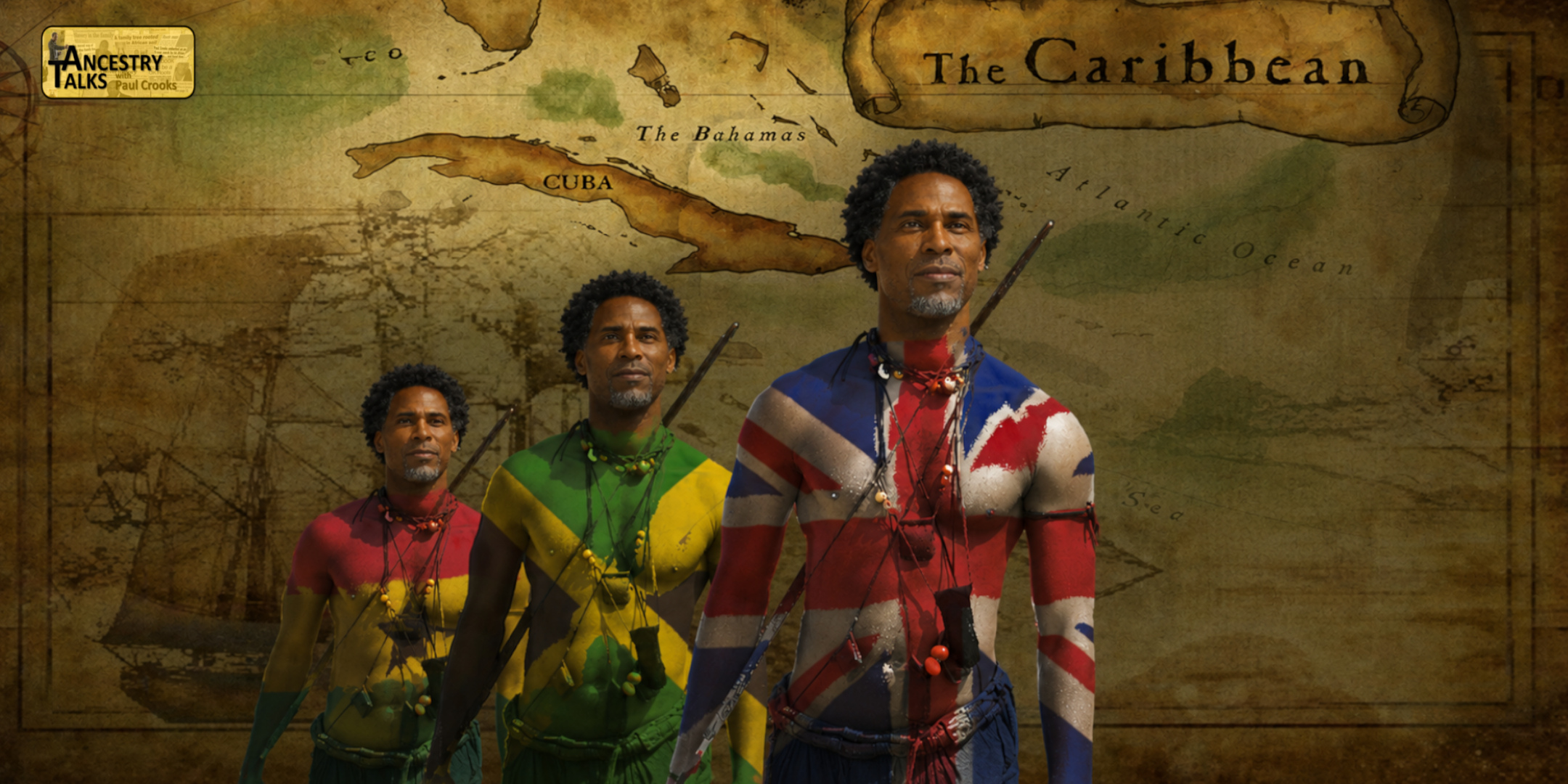
Event poster for “Tracing Black Ancestry: Reconnecting to Africa Through the Records”, an online talk on tracing African origins through Caribbean and diaspora records

The Challenge: When the Trail Appears to End

When tracing African-Caribbean ancestry, many researchers reach a point where records stop connecting. Names change. Identities shift. Family links become difficult to follow across generations shaped by slavery.

These are not unusual gaps. They reflect how historical records were created and preserved.

At this stage, the trail often appears to end.

In practice, the records do not disappear—but the way identity is represented within them changes. Continuity becomes less visible, and connections are no longer expressed clearly across documents.

What appears as a limit to research is often a structural feature of the archive itself.

Rather than treating this as the endpoint, this session reframes it as a point where the nature of the evidence must be understood differently in order to recognise what remains traceable.

To explore the methodology of the 1880 Barrier in a live, interactive environment, view upcoming session availability:
UK Eventbrite | US Eventbrite

What You’ll Gain

  • Reconstruction Context: A clearer understanding of what makes long-range ancestry reconstruction possible
  • Structural Limits Explained: Insight into why records stop connecting—and what that reflects about how they were created
  • Identity Across Generations: Recognition of how identity appears across records shaped by slavery and migration
  • Historical Perspective: A broader understanding of how Black family history extends across the Caribbean and the Atlantic world
  • Research Clarity: A more grounded view of what can—and cannot—be traced within the historical record

Who This Is For

  • Individuals researching African-Caribbean or Black ancestry
  • Those who have reached a point where records no longer connect
  • Anyone seeking to understand how Black ancestry can be traced within the limits of historical records


This session forms part of a wider series of Evidence-led talks on identity, history, and interpretation

Current schedule of evidence-led talks on identity and ancestry: UK Dates | US Dates